Cardiovascular diseases
Salt, Sodium, and Blood Pressure: What You Need to Know
Learn how sodium affects blood pressure, how much salt is too much, and simple ways to cut back - plus the importance of regular blood pressure monitoring at home.


Sodium plays an important role in the body, but too much of it can quietly put your heart health at risk. For millions of adults, especially those living with or at risk of high blood pressure (hypertension), managing sodium intake is one of the most impactful lifestyle changes you can make1.
The challenge: Sodium is everywhere. From restaurant meals to packaged foods and even items that don’t taste salty, many people consume far more sodium than they realize2. Understanding how sodium affects blood pressure - and learning practical ways to reduce it - can make a meaningful difference in long-term health.
How Sodium Affects Blood Pressure
Sodium helps regulate fluid balance in the body3. When you consume too much, your body retains extra water to dilute it4. That additional fluid increases the volume of blood flowing through your blood vessels, which raises pressure on artery walls5. Over time, this added strain can lead to high blood pressure, increasing the risk of heart disease, stroke, and kidney problems6.
For people who already have hypertension - or who have a family history of it - sodium sensitivity can be even more pronounced7. That’s why healthcare professionals consistently recommend monitoring and moderating sodium intake as part of a heart-healthy lifestyle.
How Much Sodium Is Too Much?
According to the American Heart Association (AHA)8:
Maximum recommended intake: no more than 2,300 mg of sodium per day
Ideal target: 1,500 mg per day for most adults, especially those with high blood pressure
To put that into perspective, just one restaurant meal or packaged convenience food can contain an entire day’s worth of sodium…or more9.
Globally, organizations like the World Health Organization echo these concerns, noting that reducing sodium intake is one of the most cost-effective ways to improve population-wide heart health10.
Hidden Sources of Sodium You Might Not Expect
One of the biggest challenges with sodium reduction is that much of it is hidden in everyday foods, including:
Bread and rolls
Canned soups and broths
Deli meats and cured proteins
Cheese and condiments
Frozen meals and sauces
Even foods that don’t taste salty can contribute significantly to daily sodium intake. Reading nutrition labels, choosing lower-sodium options, and cooking more meals at home can help you stay within recommended limits.
Flavor Without the Salt: A Heart-Healthy Lunch Recipe
Reducing sodium doesn’t mean eating bland food. Herbs, spices, citrus, and aromatics can add bold flavor without relying on salt.
Try this Lemon-Herb Chicken & Veggie Bowl. It’s low on sodium but big on flavor, incorporating fresh herbs, garlic, and lemon to create depth without the added salt.
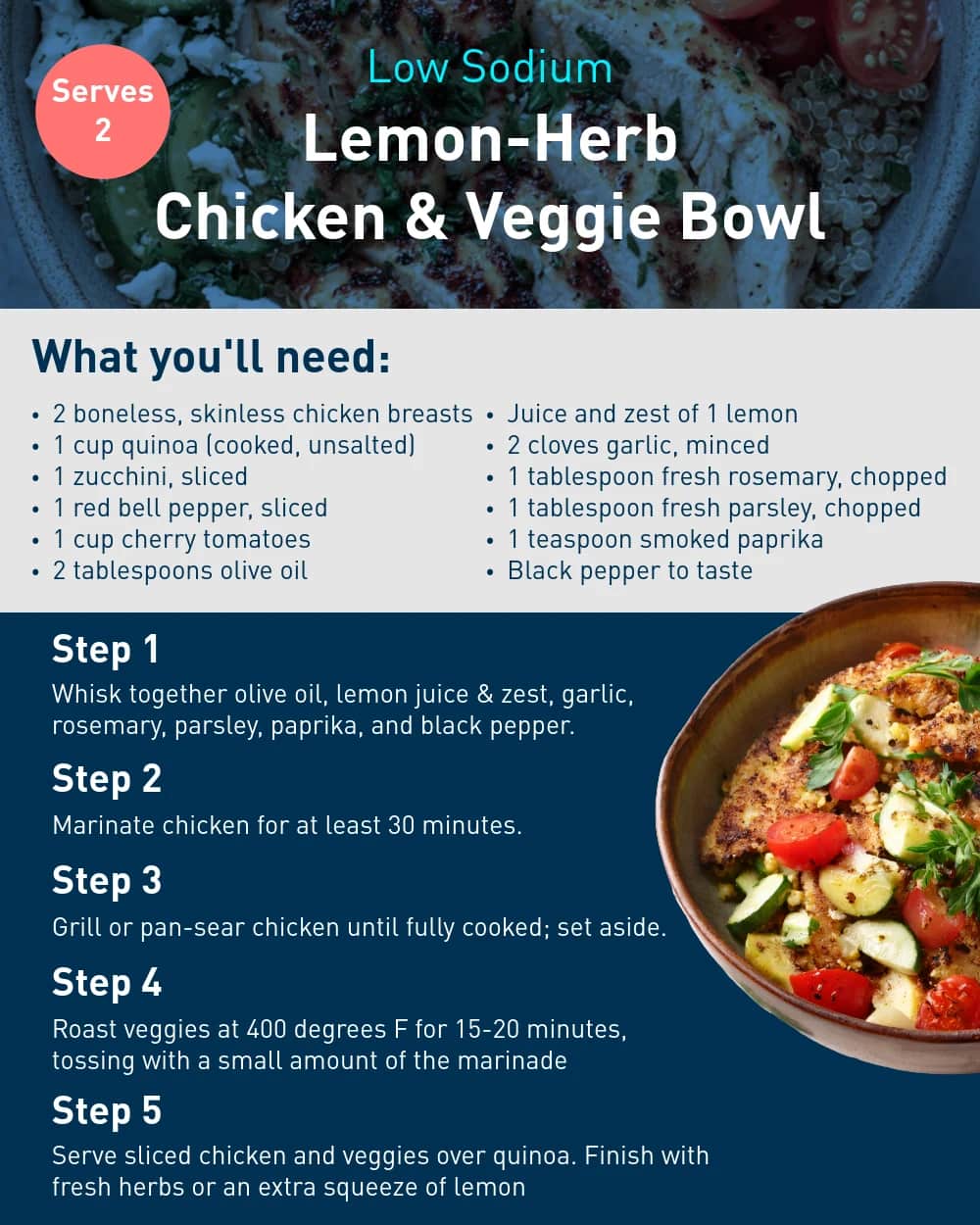 This meal is filling, flavorful, and naturally low in sodium; proof that heart-healthy eating doesn’t have to feel restrictive.
Why Monitoring Blood Pressure Matters
Dietary changes like reducing sodium can significantly support healthy blood pressure, but they’re most effective when paired with awareness. Many people with high blood pressure don’t experience noticeable symptoms, which is why hypertension is often called the “silent killer”11.
Routine blood pressure monitoring at home can help you:
Understand how diet and lifestyle affect your readings
Track trends over time
Share accurate data with your healthcare provider
OMRON Blood Pressure Monitors are clinically validated and designed for easy, reliable home use, making it simpler to stay informed and proactive about your heart health.
Take the Next Step Toward Better Heart Health
Managing sodium intake is one of the most powerful steps you can take to protect your blood pressure and overall cardiovascular health. By choosing fresh foods, cooking with herbs instead of salt, and monitoring your blood pressure regularly, you can take control, one informed choice at a time.
Small changes add up. And with the right tools and knowledge, better heart health is well within reach.
References
1,2. Berg. (2025). What doctors wish patients knew about sodium consumption. American Medical Association. https://www.ama-assn.org/public-health/prevention-wellness/what-doctors-wish-patients-knew-about-sodium-consumption
3,4,5,6,7,11. American Heart Association Staff. (2025). Get the Scoop on Sodium and Salt. American Heart Association. https://www.heart.org/en/healthy-living/healthy-eating/eat-smart/sodium/sodium-and-salt
8,9. American Heart Association Staff. (2025). How Much Sodium Should I Eat Per Day? American Heart Association. https://www.heart.org/en/healthy-living/healthy-eating/eat-smart/sodium/how-much-sodium-should-i-eat-per-day
- World Health Organization Staff. (2025). Sodium Reduction. World Health Organization. https://www.who.int/news-room/fact-sheets/detail/sodium-reduction